
HOME BUYING ROADMAP • EARNEST MONEY
What Is Earnest Money?
Understanding the Deposit That Helps Strengthen Your Offer




After you find the right home, you’ll probably hear a new term for the first time: earnest money.
Most first-time buyers have the same immediate reaction: “Wait, am I just giving the seller my money?”
You’re not. Earnest money is a good-faith deposit that shows you’re serious about the purchase, and in most transactions, it eventually becomes part of the funds you’re already planning to bring to closing. It’s not an extra fee stacked on top of everything else. Once you see how it actually works, it stops feeling like a risk and starts feeling like exactly what it is: a normal part of making an offer.
What Is Earnest Money?
Earnest money is a deposit you submit shortly after a seller accepts your offer. Its job is simple: it demonstrates that you’re committed to moving forward under the terms of the contract. The Consumer Financial Protection Bureau defines it the same way, a good-faith deposit held by a neutral third party, not handed directly to the seller.
Here’s the part that surprises people: the money doesn’t go to the seller. It’s held by a neutral third party, usually the title company or an escrow agent, until closing or until the contract is terminated according to its terms.
Why Do Sellers Ask for It?
Put yourself in the seller’s position for a second. Once they accept an offer, they typically stop showing the home to other buyers. They’re taking their house off the market based on the expectation that you intend to follow through.
Earnest money gives them confidence that you’re making a genuine commitment, not just reserving the house while you keep deciding.
How Much Do Buyers Typically Offer?
There’s no required amount. What’s appropriate depends on:
- The purchase price
- Local market conditions
- How much competition you’re up against
- The overall strength of your offer
As a starting point for your planning: earnest money typically runs 1% to 3% of the purchase price. On a $250,000 home, that’s roughly $2,500 to $7,500, money you should plan to have accessible shortly after your offer is accepted, separate from your down payment and closing costs.
In a competitive market, buyers sometimes offer a larger deposit, occasionally above that range, to signal commitment. In a slower market, a smaller deposit can be perfectly appropriate. We’ll talk through what’s customary for your specific situation before we write an offer. It’s not a one-size-fits-all number, but the range above is a solid starting point for budgeting.
Is Earnest Money Refundable?
This is the question almost everyone asks, and the honest answer is: it depends on what happens during the transaction, and it’s always governed by the terms of your specific purchase contract.
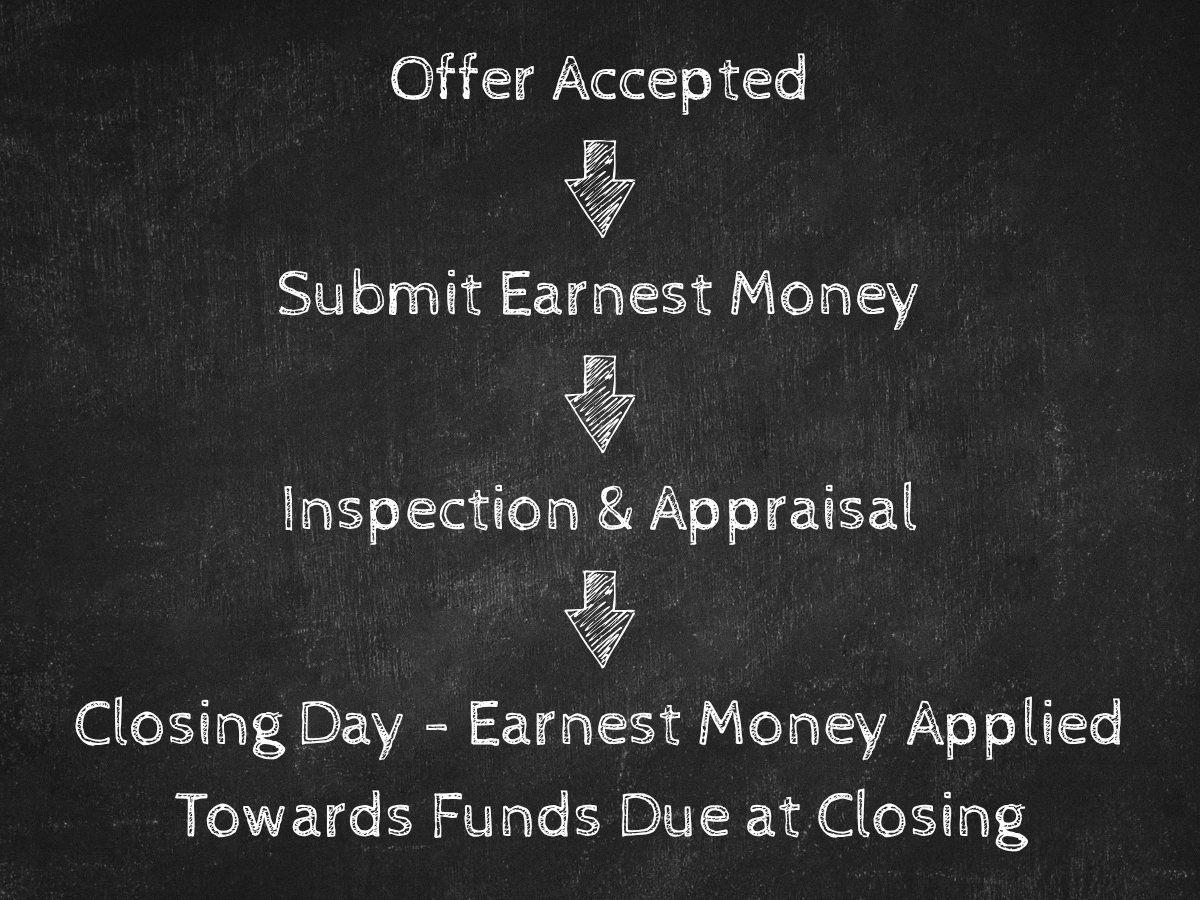
- If the purchase moves forward as planned, your earnest money is applied toward your closing costs or down payment. It doesn’t disappear; it becomes part of the money you were bringing anyway.
- If the contract is terminated under a contingency, buyers are typically entitled to have their earnest money returned.
- If a buyer walks away without a valid contractual reason, the earnest money could be at risk.
Every contract is different, which is exactly why understanding your deadlines and contingencies matters before you make any decisions mid-transaction. If you’d like to see the actual language, the Oklahoma Real Estate Commission publishes the standard contract forms used in most Oklahoma transactions, including the earnest money provisions themselves.
Earnest Money vs. Down Payment
These two get confused constantly, but they’re doing different jobs:
| Earnest Money | Down Payment | |
|---|---|---|
| When | Submitted shortly after an accepted offer | Paid at closing |
| Held by | A neutral third party | buyer – goes toward the purchase |
| Purpose | Demonstrates commitment to the purchase | Reduces the amount you borrow |
| What it becomes | Usually applied toward funds due at closing | Becomes part of your ownership in the home |
One doesn’t replace the other, but your earnest money usually ends up counting toward the money you’re already bringing to the table.
Important Buyer Protections
In many purchase contracts, buyers have contractual protections: inspection, financing, and appraisal contingencies. These can affect what happens to earnest money if the transaction doesn’t move forward.
Those deserve their own deep dive rather than a quick summary here, so I’m covering each one in detail in another post:
- Home Inspection Contingency
- What Happens if the Home Doesn’t Appraise?
- What Happens if My Financing Falls Through?
For now, the short version: these aren’t loopholes. They’re negotiated parts of your contract designed to manage risk in specific situations, and we’ll walk through exactly how they apply to your offer before you sign anything.
Can Earnest Money Make Your Offer Stronger?
Sometimes. Price matters, but sellers often weigh the entire offer, including:
- Purchase price
- Closing timeline
- Financing type
- Requested concessions
- Contingencies
- Earnest money amount
A larger deposit doesn’t guarantee your offer gets accepted, but in the right situation, it can help demonstrate confidence and commitment alongside everything else in your offer.

Don’t Worry – We’ll Talk Through It
Buyers often feel overwhelmed writing an offer simply because so many unfamiliar terms show up at once. That’s completely normal, and it’s not something you’re expected to already know.
Before you sign anything, we’ll go over every part of the offer together, earnest money included, so you understand exactly what it means and how it fits into the bigger picture.
My Approach
I don’t think buyers should ever feel like they’re signing something they don’t fully understand. When we prepare an offer, I’ll walk you through how the earnest money deposit works, talk through what’s typical for the current market, and answer every question before anything gets submitted.
The strongest offer isn’t always the one with the highest price. Sometimes it’s the one that’s thoughtfully structured to meet the seller’s priorities while still protecting yours.
Frequently Asked Questions
Do I write the earnest money check when I make the offer? Usually not. In most transactions, earnest money is delivered after the seller accepts, according to the timeline laid out in the contract.
Does the seller keep my earnest money? Not automatically. It’s held by a neutral third party and handled according to the terms of the purchase contract.
What happens to earnest money at closing? In most cases, it’s credited toward the funds you’re already bringing to closing, your down payment or buyer closing costs.
Ready for the next step?
Once your offer is accepted, the next phase begins. Learn what happens during the home inspection and why it’s one of your best opportunities to understand a home’s condition before closing.
Next: Understanding the Home Inspection →
Curious what it’s like to tour homes together? My Buying a Home page explains what it’s like to work together.

Shannon Almy
REALTOR-ASSOCIATE®
Erin Catron & Company | The Catron Team
Tulsa-area Real Estate Agent with an analytics background. Lifelong Oklahoman, Travel Planner, content creator, furniture restorer, and thrift-store regular.
For Buyers
Latest Tulsa Home Buyer Tips
Buying a home comes with more questions than any one conversation can cover, financing, timing, what’s actually worth negotiating. Here’s honest, straightforward guidance for every stage of the process, from your first pre-approval call to the day you get your keys.
-
Should I Buy in an HOA? The Rules, Costs, and Responsibilities That Come With the House
HOME BUYING ROADMAP • HOA CONSIDERATIONS Should I Buy a Home in an HOA? The Rules, Costs, and Responsibilities That Come With the House “Should I buy in an HOA?” is one of those questions…
-
Title Insurance and Title Work: What You’re Actually Paying For
HOME BUYING ROADMAP • TITLE INSURANCE Title Insurance and Title Work: What You’re Actually Paying For Why “The House Looks Fine” Isn’t the Same as “The Ownership Is Clean” By the time you’re under contract,…
-
Offer Strategies: How to Write a Strong Offer
HOME BUYING ROADMAP • OFFER STRATEGIES Offer Strategies: How to Write a Strong Offer Price Is Only One Part of the Equation When buyers hear “write a strong offer,” most immediately think about price, offering…


More Home Buying Tips
Your Monthly Guide To Tulsa Real Estate & Local Life
Stay Connected To What’s Happening Across Tulsa
From market trends and neighborhood updates to local events, new restaurants, and community news, receive a monthly roundup of what’s happening throughout Tulsa and Green Country.
Whether you’re actively buying or selling, planning a move in the future, or simply enjoy staying connected to the community, our newsletter brings together local real estate insights and the stories shaping life across northeastern Oklahoma.
✓ Tulsa market updates
✓ Community spotlights
✓ New restaurants and businesses
✓ Open houses and local events
✓ Neighborhood and development news
Market Reports & Local Life
WHEREVER YOU ARE IN THE PROCESS
Let’s Talk About Your Goals
Whether you’re buying, selling, relocating, or simply planning ahead, every successful move starts with a conversation and a clear strategy.
I’d love to learn more about your goals and how I can help you navigate your next move with confidence.
Shannon Almy
REALTOR-ASSOCIATE®”
The Catron Team
Phone
918-206-9285
5334 East 43th Street
Tulsa, OK 74135


Leave a Reply